
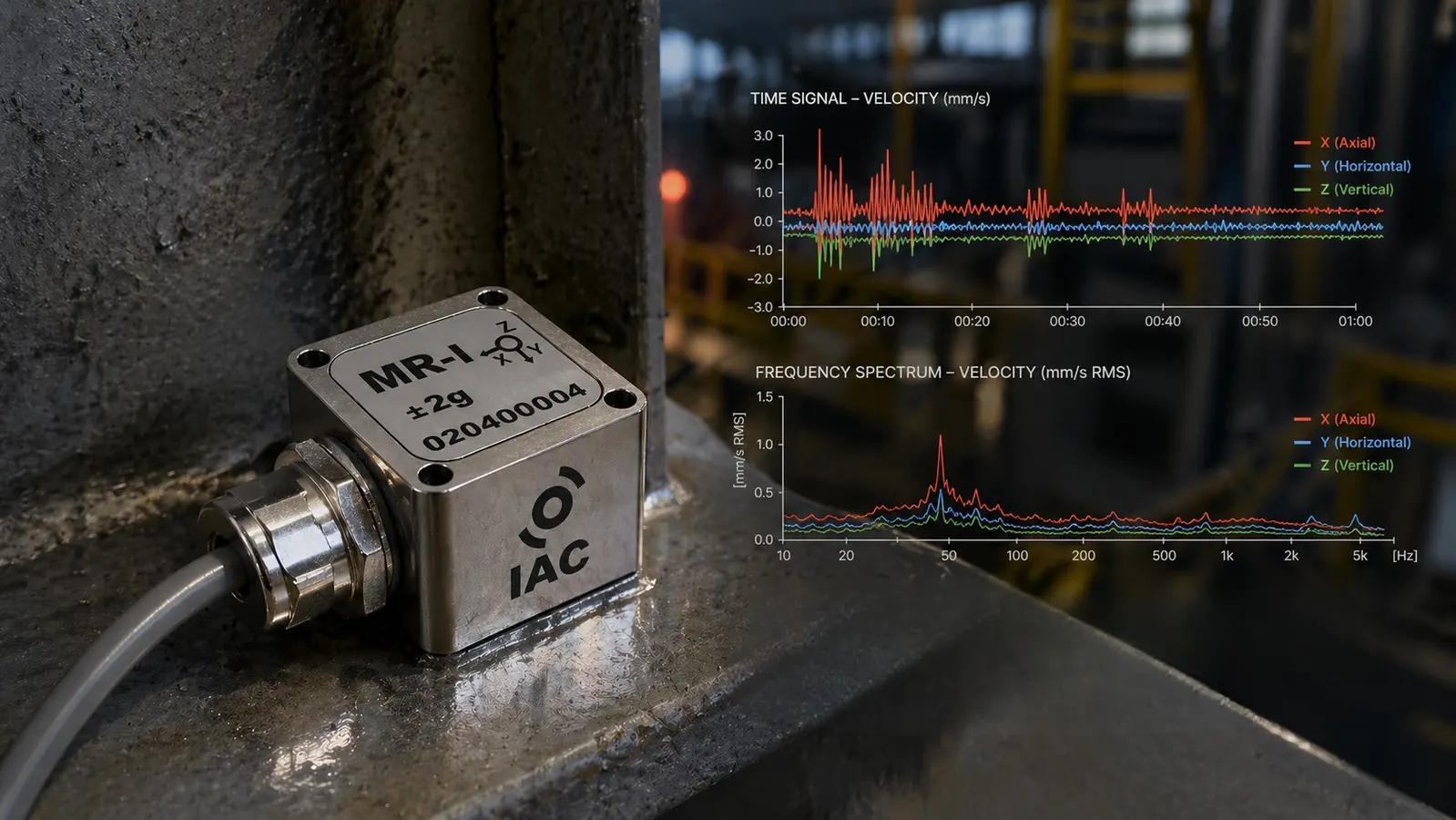
Choosing a vibration monitoring solution is not about selecting a device, but about designing a coherent monitoring strategy aligned with technical objectives, risk levels, and operational constraints. In European construction and industrial contexts, a well-defined approach is essential to ensure reliability, compliance, and meaningful use of vibration data.
This page explains how to structure, select, and deploy a vibration monitoring solution in a rigorous and defensible way.
Why Choosing a Monitoring Solution Requires a Structured Approach
Vibration monitoring solutions are often deployed to address critical issues such as structural protection, regulatory compliance, asset reliability, or dispute prevention. Without a clear framework, monitoring systems risk becoming either over-engineered or under-utilised.
A structured approach ensures that:
- monitoring objectives are clearly defined,
- technical choices are justified,
- collected data supports real decisions,
- results remain defensible over time.
In Europe, this structured approach is particularly important due to the frequent use of vibration data in contractual and regulatory contexts.
Step 1: Define Monitoring Objectives
The first step is to clarify why vibrations need to be monitored. Objectives may vary significantly depending on the project or application.
Typical objectives include:
- compliance with vibration standards,
- protection of nearby buildings or equipment,
- early detection of mechanical degradation,
- support for condition-based maintenance,
- prevention and management of disputes.
Each objective leads to different technical and operational requirements.
Step 2: Understand the Monitoring Context
Monitoring requirements depend strongly on the context in which the solution will be deployed.
Key contextual factors include:
- construction site or industrial environment,
- temporary or permanent installation,
- proximity to sensitive structures or equipment,
- expected vibration levels and variability,
- accessibility and environmental constraints.
Ignoring context often leads to inappropriate system design.
Step 3: Select the Appropriate Monitoring Approach
Based on objectives and context, the monitoring strategy may involve:
- spot measurements,
- continuous monitoring,
- real-time monitoring with alerts,
- or a combination of these approaches.
The selected approach should balance risk coverage, operational complexity, and project duration. High-risk or long-term projects generally justify continuous monitoring.
Step 4: Choose Suitable Vibration Sensors
Sensor selection must be driven by measurement objectives rather than technology preference.
Key criteria include:
- vibration quantity to be measured (velocity, acceleration, displacement),
- relevant frequency range,
- required sensitivity and dynamic range,
- environmental resistance,
- installation and maintenance constraints.
In Europe, sensor suitability is often scrutinised when vibration data is used for compliance or expert assessment.
Step 5: Define Thresholds and Alert Logic
Monitoring systems rely on thresholds to identify abnormal or unacceptable vibration levels.
Thresholds should be defined using:
- applicable standards,
- baseline measurements,
- acceptable risk levels,
- project-specific constraints.
Alert logic should distinguish between warning levels and alarm levels to avoid unnecessary interruptions or alert fatigue.
Step 6: Data Acquisition, Storage, and Accessibility
A monitoring solution must ensure reliable data handling throughout the project lifecycle.
This includes:
- continuous and traceable data acquisition,
- secure data storage,
- controlled access for relevant stakeholders,
- long-term data availability when required.
Data that cannot be retrieved, explained, or audited loses its value.
Step 7: Interpretation and Decision Processes
Monitoring data must be integrated into clear decision-making workflows.
This requires:
- defined responsibilities for data review,
- procedures for responding to alerts,
- correlation of vibration data with activities or operating conditions,
- documentation of actions taken.
A monitoring solution without defined decision processes provides limited benefit.
Practical Deployment Constraints
Successful deployment also depends on practical considerations, such as:
- installation time and complexity,
- power supply and connectivity,
- accessibility of monitoring locations,
- robustness against environmental conditions.
Addressing these constraints early prevents operational issues during deployment.
Common Mistakes When Deploying Monitoring Solutions
Frequent mistakes include:
- focusing only on hardware selection,
- neglecting baseline measurements,
- deploying monitoring without clear objectives,
- underestimating data interpretation effort,
- lacking ownership of monitoring results.
Avoiding these pitfalls significantly improves monitoring effectiveness.
Reviewing and Adapting the Monitoring Strategy
A vibration monitoring solution should evolve over time. As conditions change, it may be necessary to:
- adjust thresholds,
- refine sensor placement,
- improve interpretation methods,
- update reporting practices.
Regular review ensures that the solution remains aligned with objectives.
From Monitoring Tools to Risk Management Systems
When properly designed and deployed, a vibration monitoring solution becomes more than a measurement system. It functions as a risk management tool that supports transparency, accountability, and informed decision-making across construction and industrial projects.