
Blog
Mastering Vibration Measurement
Explore in-depth guides on accelerometers, vibration ranges, and frequency analysis to better understand, measure, and control vibrations in demanding environments.

Interpreting Vibration Data: Analysis, Trends, and Decision-Making
Measuring or monitoring vibrations only becomes valuable when the collected data is correctly interpreted. In European construction and industrial contexts, vibration data interpretation is essential for assessing risk, demonstrating compliance, and supporting...

Vibration Standards and Regulations: Limits, Compliance, and Best Practices in Europe
Vibration standards and regulations define how vibration levels must be measured, assessed, and limited in order to protect buildings, infrastructure, equipment, and people. In Europe, vibration assessment is largely based on recognised technical standards that...
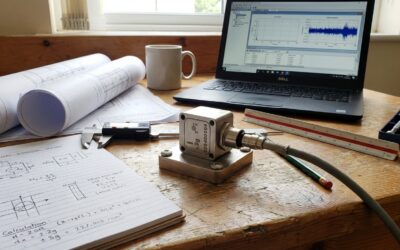
Vibration Sensors: Technologies, Differences, and Selection Criteria
Vibration sensors are at the core of any vibration measurement or monitoring system. They convert mechanical vibrations into measurable signals that can be analysed to assess structural integrity, machine condition, or environmental impact. In Europe, the correct...
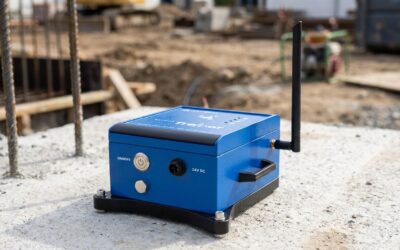
Measuring Vibrations on Construction Sites: Methods, Standards, and Best Practices
Measuring vibrations on construction sites is a critical practice in Europe, particularly in dense urban environments and near existing buildings or sensitive infrastructure. Construction activities such as demolition, piling, drilling, or the operation of heavy...

Best Solutions to Monitor Tilt and Vibration in Offshore Installations
Offshore structures such as wind turbines, oil platforms, and floating foundations are constantly exposed to waves, wind, and dynamic loads. These forces create vibrations and slow structural tilts that can lead to fatigue, misalignment, or permanent deformation over...
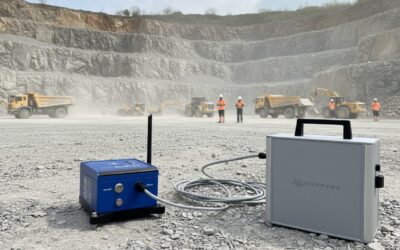
Why Quarries and Mines Must Rely on DIN 4150-3
A Context Where Vibrations Quickly Become a Sensitive Issue In quarries and mines, vibrations are normal—blast shots, crushing operations, heavy machinery… they all generate ground motion. But for nearby residents, these vibrations can become a source of concern,...

Understanding the DIN 4150 Standard: Vibration and Construction Monitoring
When construction begins, whether it’s deep piling, renovation in an urban area, or installing heavy machinery, vibrations quickly become a concern. They can affect both the comfort of nearby occupants and the structural integrity of buildings. The DIN 4150 standard...
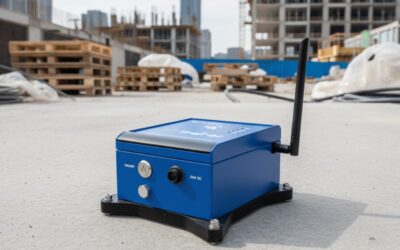
How to Avoid Complaints from Residents About Vibrations During Demolition
Why Vibrations Trigger Complaints in Urban Demolition Demolition in dense urban areas is never neutral for the surrounding community. Beyond noise and dust, vibrations often generate the strongest reactions. Even when levels remain below regulatory thresholds,...
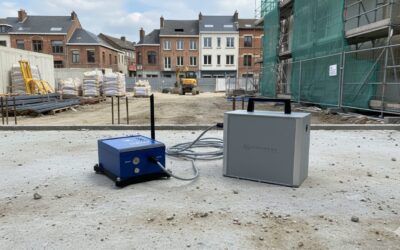
How to Prove Structural Safety When Working Close to Existing Infrastructure
Construction projects near existing buildings, tunnels, or transport infrastructure always come with a challenge: how to guarantee that your activities do not endanger nearby structures. Whether it’s excavation, piling, or demolition, vibrations and ground movements...

What Is a MEMS Accelerometer and How Does It Work?
In many industrial and scientific applications, accurate vibration and motion measurement is essential. Whether monitoring a bridge’s structural integrity, a wind turbine’s foundation, or a precision machine tool, engineers rely on accelerometers to measure...